Soffit & Fascia
Worn roof-edge trim or damaged overhangs? Let’s give those details some attention. We install and repair soffit and fascia alongside siding and exterior remodeling.
Soffit and fascia are easy to overlook until an overhang or roof edge needs attention. They help with airflow, moisture control and protecting the roofline.
What soffit and fascia do
Soffit is the material underneath your roof overhang. Vented soffit brings fresh air into a vented attic as part of a balanced ventilation system. That airflow helps regulate temperature and keeps moisture from building up. Fascia is the board that runs along the edge of your roofline. Gutters are often mounted along it, and it helps protect the roof edge from water intrusion.
When both are working properly, they help control attic heat and moisture and protect the roof edge, reducing the risk of issues that can turn into expensive repairs later on.
Airflow and roofline deterioration
Where we see problems is usually with airflow and deterioration over time. If soffit vents are blocked, covered by insulation, or just not installed correctly, your attic can trap heat and moisture. That heat has nowhere to go, so it builds up under your roof decking. Over time, that can lead to warping, premature shingle failure, and even mold issues in some cases.
Fascia tends to fail in a different way. The areas exposed to sun and rain take a beating year after year. Once that board starts to break down, water can work its way in and spread into surrounding areas. It doesn’t stay contained. It moves into the roof edge, sometimes into the walls, and that’s when small problems turn into bigger ones.
This is why we don’t treat soffit and fascia as an afterthought. When we’re working on a home, we look at how everything functions together. Proper intake ventilation, clean installation, and solid backing are all part of the process.
Materials and ventilation
We typically install James Hardie soffit and fascia because it holds up better than traditional wood, especially in Florida’s climate. It resists moisture, pests, and the constant exposure that tends to wear down other materials. For soffit, we make sure the right areas are vented and that airflow isn’t restricted. We check that airflow carefully.
There are also different configurations depending on the home. Perforated soffit is used where intake airflow is needed, while solid soffit is used where intake ventilation is not part of the design, often at gable overhangs. The layout needs to suit your home, and correct installation matters to how the system works.
Solid backing and a finished roofline
Another detail that comes up often is what’s behind the soffit and fascia. Sometimes the framing underneath doesn’t provide enough support for proper installation. In those cases, we add blocking so everything has a solid, secure base. It’s one of those things you won’t see when the job is done, but it makes a difference in how everything holds up long term.
From a visual standpoint, soffit and fascia also help define the roofline. Clean lines, consistent color, and proper alignment give the home a more finished look. It ties everything together, especially when paired with updated siding and trim.
A properly planned and installed roofline supports the ventilation and protection your home needs. We’ll help you understand those details, so you know what the soffit and fascia are doing as well as how they’ll look.
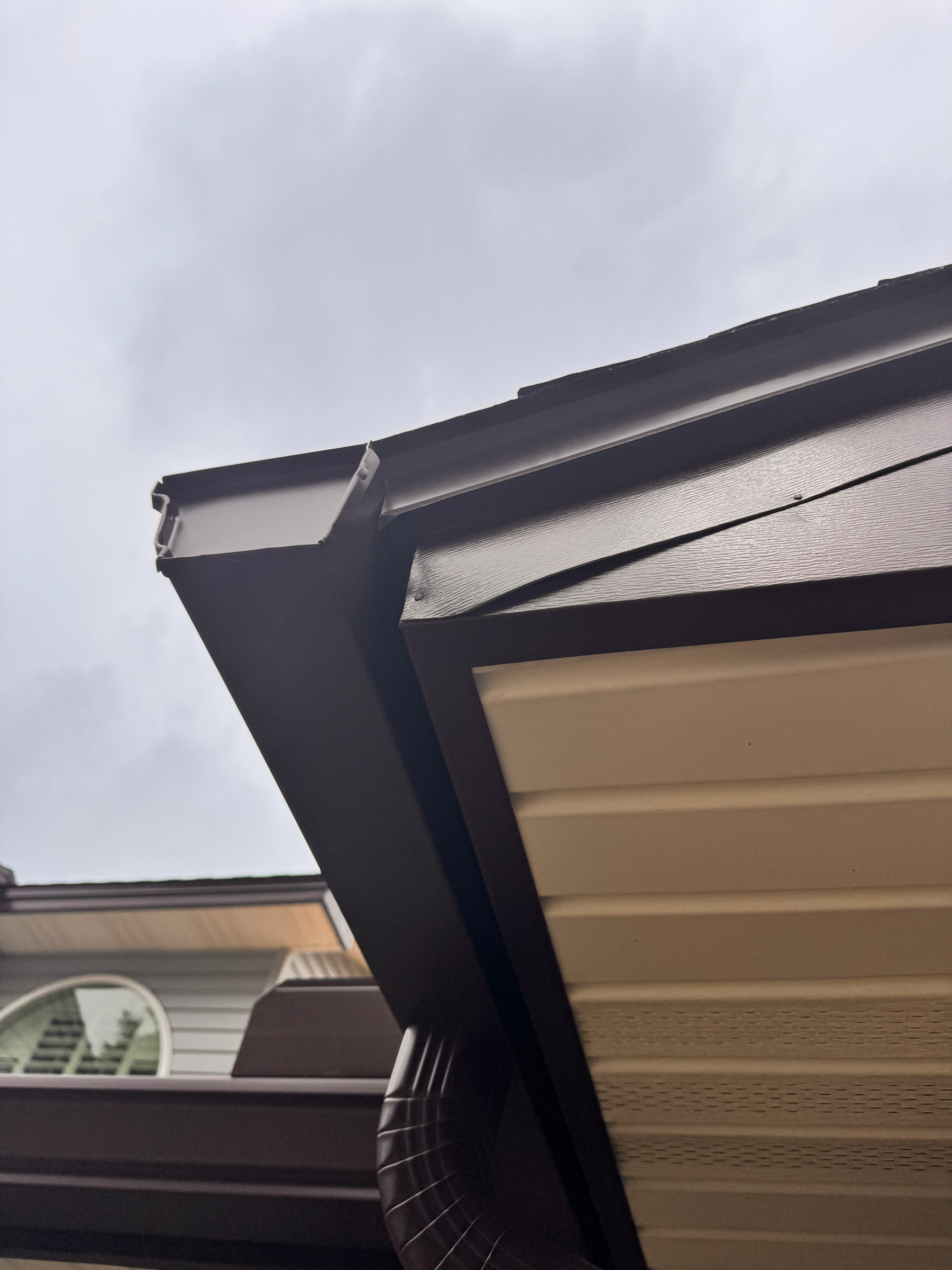
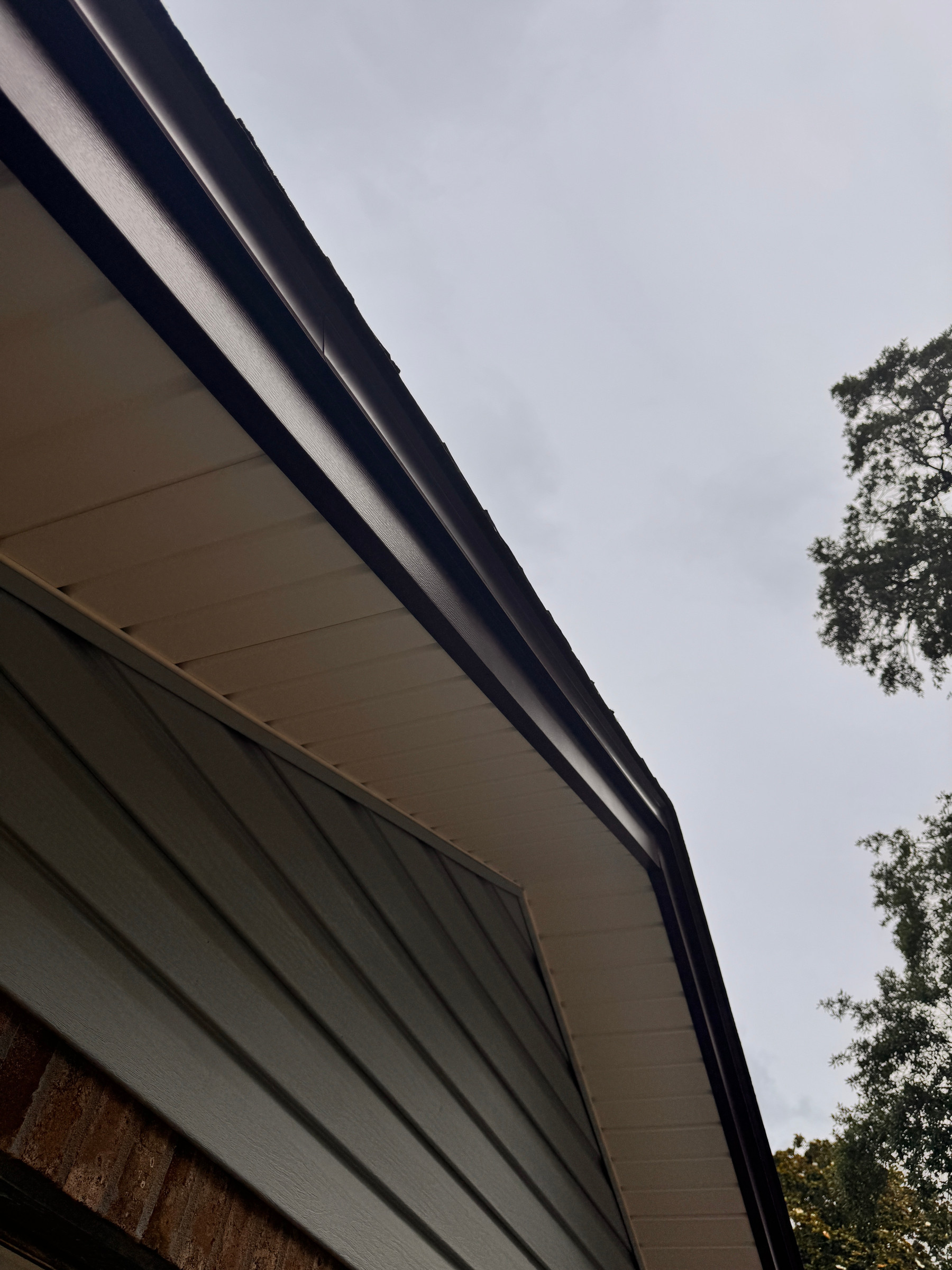
The photos below show the existing vinyl soffit in Niceville before replacement. They give us a useful look at the roof-edge condition we assess at the start of a job. The soffit installation photo on our Services page comes from a different project and shows work still underway.
Vented eaves and solid rakes
We generally use ventilated soffit along the eaves and solid soffit along the rakes. The eaves are the lower roof edges, usually where the gutters sit. On a home with a vented attic, openings in the soffit let outside air enter low on the roof and work with exhaust ventilation higher up. This airflow helps manage heat and moisture.
Vented soffit may have visible perforations or concealed openings. Solid soffit has no ventilation openings. We use solid panels along the rakes, the sloping edges at the gable ends, because those overhangs typically don’t connect to the main attic.
We check how the roof and attic are built before choosing the soffit layout. Vented panels need a clear airflow path behind them and suitable exhaust ventilation. Homes designed with an unvented attic need a different approach.
For further reading, compare James Hardie soffit panel options and GAF’s guides to soffit intake ventilation and vented and unvented attics. These explain the materials and airflow choices; the layout still needs to match your home.